
How to take hair transplant progress photos, month by month
A hair transplant takes many months to show its result, and on the way the hair can look worse before it looks better. Monthly photos taken the same way every time let you see what changed, and they give you something concrete to show your surgeon. This guide covers the photos; your clinic’s aftercare instructions come first.
Using SameShot already? The hair growth use case has the project setup and a sample series. Everything below works with any camera.
What the months after a hair transplant can look like
Medical sources describe roughly the same stages, though the timings vary from person to person and between sources:
- Between two and eight weeks after surgery, the transplanted hair falls out, which the American Academy of Dermatology describes as normal.
- By the third month, the AAD says, the hair may look thinner than it did before the transplant.
- The NHS says new hair usually starts to appear after about 4 months.
- Most patients see results between six and nine months after surgery, and for some it takes 12 months (AAD). The NHS puts the full result at 10 to 18 months.
Both sources also say hair loss and thinning can carry on after a transplant, which is one reason to photograph the crown and the sides as well as the grafted area. Ask your surgeon what to expect for your own procedure, and about anything in the photos that worries you.
The five views to photograph
Ask your clinic which views they photograph at your checkups and copy them, so your photos and theirs can be compared. A common set is:
- The front hairline, head level, eyes looking into the lens.
- The left temple, with your head turned about 45 degrees.
- The right temple, the mirror of the left.
- The crown from above, with your chin tipped toward your chest.
- The donor area at the back of the head.
The crown and the back are hard to shoot alone, so prop the phone, use the self timer and keep the same chin angle each time. In SameShot each view is its own project with its own ghost. The free version keeps one project, so following more than one view needs Premium. If your clinic gave you photos from before the surgery, import them: SameShot slots imported photos into the timeline by the date they were taken.
A baseline, then one set a month
Take a full set before surgery if you can, then follow your surgeon’s aftercare. The NHS says to be very careful with transplanted hair for the first 2 weeks and not to touch the grafts, so photograph without combing or styling until you are told you can. After that, one set a month on the same date is enough: daily photos show almost no change from one day to the next, and they make the shedding months harder to sit through. SameShot can remind you every month, and its milestone reminders also fall on day 7, day 30 and day 100.
Dry hair, the same parting and no concealers
Wet hair clumps together and shows more scalp, so shoot with your hair dry and combed into the same parting each month, once your surgeon says combing is fine. Leave out fibres, powders and styling products on photo days, because they hide the scalp the photo is meant to show.
Light that does not exaggerate thinning
A single ceiling light straight above the head puts shadows between the hairs and lights up the scalp through them. Face a window in daylight, or bounce a lamp off the wall behind the phone, switch the overhead lights off and keep the same setup for every session. Leave the flash off too.
Lining up the hairline each month
Tip your head back a little and the hairline sits higher in the frame and the forehead looks shorter, so a small change in head angle can look like progress or like loss. Match your eyebrows, the bridge of your nose and your ears to last month’s photo before you shoot.
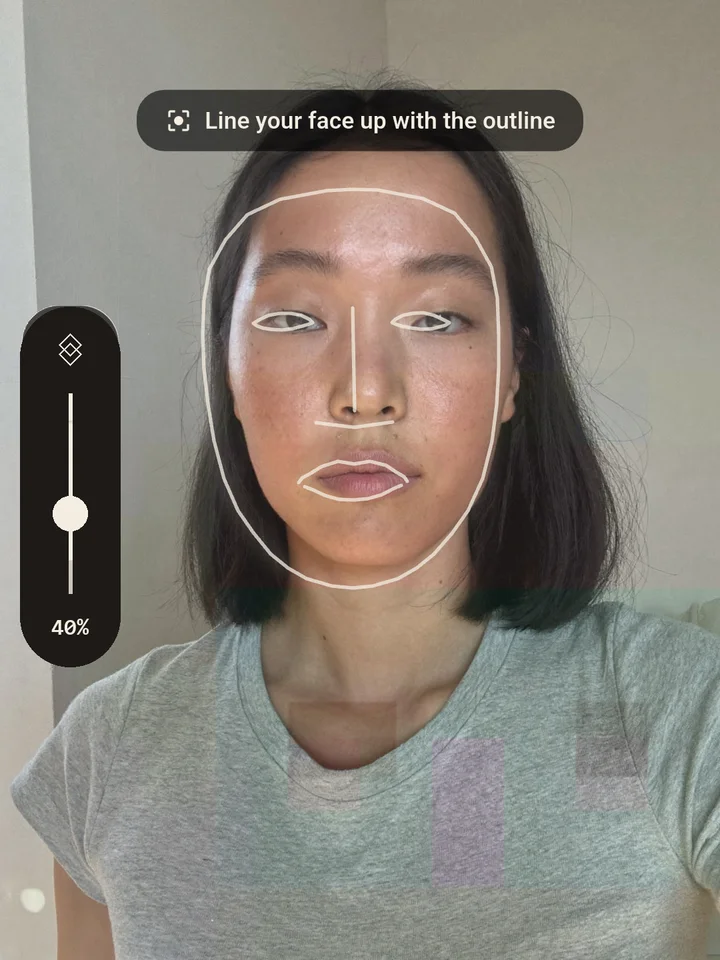
SameShot shows last month’s photo as a faint ghost over the live camera, with its opacity on a slider. After the shot, each photo carries a thin line in red, amber or green for how well it lined up, and the full-screen viewer says Good, Fair or Poor. That measures the framing only; the app makes no judgement about your hair.
After a year of monthly sets, play a view back in the app or export it as a time lapse video, or put the photos through the free progress photo time lapse maker. The photo cadence planner helps you plan the dates.
Hair transplant photo checklist
| How often | A set before surgery, then once a month on the same date |
|---|---|
| Views | Front hairline, left and right temples, crown, donor area |
| Hair | Dry, same parting, no fibres or concealers, once your surgeon allows combing |
| Light | Daylight from in front, with ceiling lights and flash off |
| Alignment | Eyebrows, nose bridge and ears matched to last month’s photo |
Hair transplant progress photo questions
How often should I photograph my hair transplant recovery?
Take a full set before surgery if you can, then once a month on the same date. Follow your surgeon’s aftercare in the first weeks: the NHS says to be very careful with the transplanted hair for the first 2 weeks and not to touch the grafts.
Why does my hair transplant look thinner at month 2 or 3?
The American Academy of Dermatology says the transplanted hair falls out between two and eight weeks after surgery, and that by the third month the hair may look thinner than before the transplant. It describes both as normal. Ask your surgeon about anything that looks different from what you were told to expect.
When will I see results from a hair transplant?
The AAD says most patients see results between six and nine months after surgery, and that for some it takes 12 months. The NHS says new hair usually starts to appear after about 4 months, with the full results seen at 10 to 18 months.
Which angles should I photograph after a hair transplant?
The front hairline, the left and right temples at about 45 degrees, the crown from above and the donor area at the back. If your clinic photographs other views at your checkups, copy theirs.
Should I photograph wet or dry hair?
Dry, and combed into the same parting every time once your surgeon says combing is fine. Wet hair clumps together and shows more scalp, which makes month to month comparisons unreliable.